
Partial Dentures in West Edmonton
A Practical Solution That Actually Works
A removable partial denture replaces one or more missing teeth in an arch where some natural teeth still remain. It's made up of custom artificial teeth attached to a metal or acrylic framework that clasps onto your existing teeth for support and stability. You remove it for cleaning each day — that's the only real difference from a fixed restoration.
At La Perle Dental Centre, partial dentures are handled in-house at fees below the Alberta fee guide. We direct bill your insurance and offer flexible in-house payment plans for any remaining balance. We'll look at your mouth, explain your options clearly, and help you make the decision that makes the most sense for your situation.

Restores What You've Lost
Missing teeth affect more than appearance. They change how you chew, how you speak, and over time, how your face looks. A partial denture gives you back the function and confidence that gaps take away — without surgery, without implants, and at a fraction of the cost of other options.
Protects the Teeth You Still Have
When a tooth goes missing, the teeth beside and opposite it don't just sit there. They move. They tilt. They drift into the space and start creating problems that are far more expensive to fix later. A partial denture fills that space and keeps everything where it belongs.


No Surgery Required
Partial dentures are a non-invasive solution. There are no implants, no incisions, and no healing period. For patients who aren't candidates for surgery, or who want a reliable, cost-effective option, a partial denture is often the right call.

Accepting the Canadian
Dental Care Plan
What a Partial Denture Does for You
Replacing missing teeth isn't just about your smile. It's about your long-term oral health and quality of life. Here's what a well-fitted partial denture accomplishes:
- Restores your ability to chew and eat comfortably
- Improves speech that has been affected by missing teeth
- Prevents remaining teeth from drifting into the gaps
- Restores the appearance of your smile and facial fullness
- Protects the bone and surrounding tissue from further change
- Keeps your bite balanced so no single tooth takes on too much pressure

Who Is a Good Candidate
A partial denture is worth considering if you are missing one or more teeth and still have healthy natural teeth remaining in that arch. At your consultation, we look at:
- The location and number of missing teeth
- The condition of your remaining teeth, which serve as anchors for the framework
- Your gum and bone health in the area
- Whether any existing teeth need to be treated before we begin
- Your budget and what your insurance plan covers
Not everyone is an immediate candidate. If there are cavities, gum disease, or other issues that need to be addressed first, we'll be upfront about that and build a plan that gets you there.

What Happens If Missing Teeth Are Left Unaddressed
Gaps in your mouth don't stay neutral. The longer they're left without a replacement, the more the surrounding teeth and bone respond — and rarely in a good way:
- Remaining teeth drift and tilt into the gaps, causing bite problems and misalignment
- Opposing teeth grow down into the empty space and can become difficult or impossible to restore
- Bone continues to shrink beneath the gap, making future treatment more involved and more costly
- Uneven chewing load puts excess pressure on remaining teeth, accelerating wear and cracking
- Changes to facial appearance develop as bone loss causes the cheeks and lips to sink inward
- Speech difficulties and loss of confidence in social situations become increasingly noticeable
The longer the treatment is delayed, the fewer options remain. A partial denture fitted now is almost always simpler and less costly than dealing with the consequences of waiting.

How Your Partial Denture Is Made
Getting a partial denture takes four to five appointments over four to six weeks. Here is what each visit involves.
Preliminary Impressions
We take moulds of your upper and lower arches and create study models. These let us plan the design of your denture before any fabrication begins.
Abutment Preparation
The natural teeth that will support the denture framework may need to be lightly shaped to create precise resting points for the clasps. This is minor and done under local anaesthesia if needed.
Final Impressions
Precise final impressions are taken and sent to a dental lab where your custom denture is fabricated. Tooth shade and shape are confirmed at this stage so the result looks natural.
Try-In Appointment
The framework or wax try-in is placed in your mouth so we can check the fit, the bite, and the appearance before the denture is finalised. Any adjustments are made before the final version is produced.
Delivery & Fitting
Your finished denture is delivered, fitted, and adjusted. We walk you through how to insert, remove, and care for it properly. A follow-up appointment one week later is included to address any sore spots or bite concerns.
The Adjustment Period
It is completely normal for a new partial denture to feel unfamiliar for the first two to four weeks. Mild soreness, increased saliva, and minor speech changes are all expected and will improve as your mouth adapts. Most patients feel comfortable and natural within a month.
If you have persistent sore spots or difficulty after two weeks, call us. Adjustment appointments are part of the process and we'll take care of it.
Care tips to keep your denture lasting:
- Remove and rinse after eating
- Brush your denture daily with a soft brush — not regular toothpaste, which is too abrasive
- Soak it overnight in denture solution to keep it clean and maintain its shape
- Continue brushing your natural teeth and gums as normal
- Bring your denture to every checkup so we can check the fit as your mouth changes over time
A cast metal partial denture, with proper care, typically lasts 10 to 15 years or more. The fit may need to be adjusted or relined over time as bone and gum tissue naturally changes.

A Team That Listens Before It Acts
We Handle Complex Cases In-House
We Focus on Results, Not Recommendations
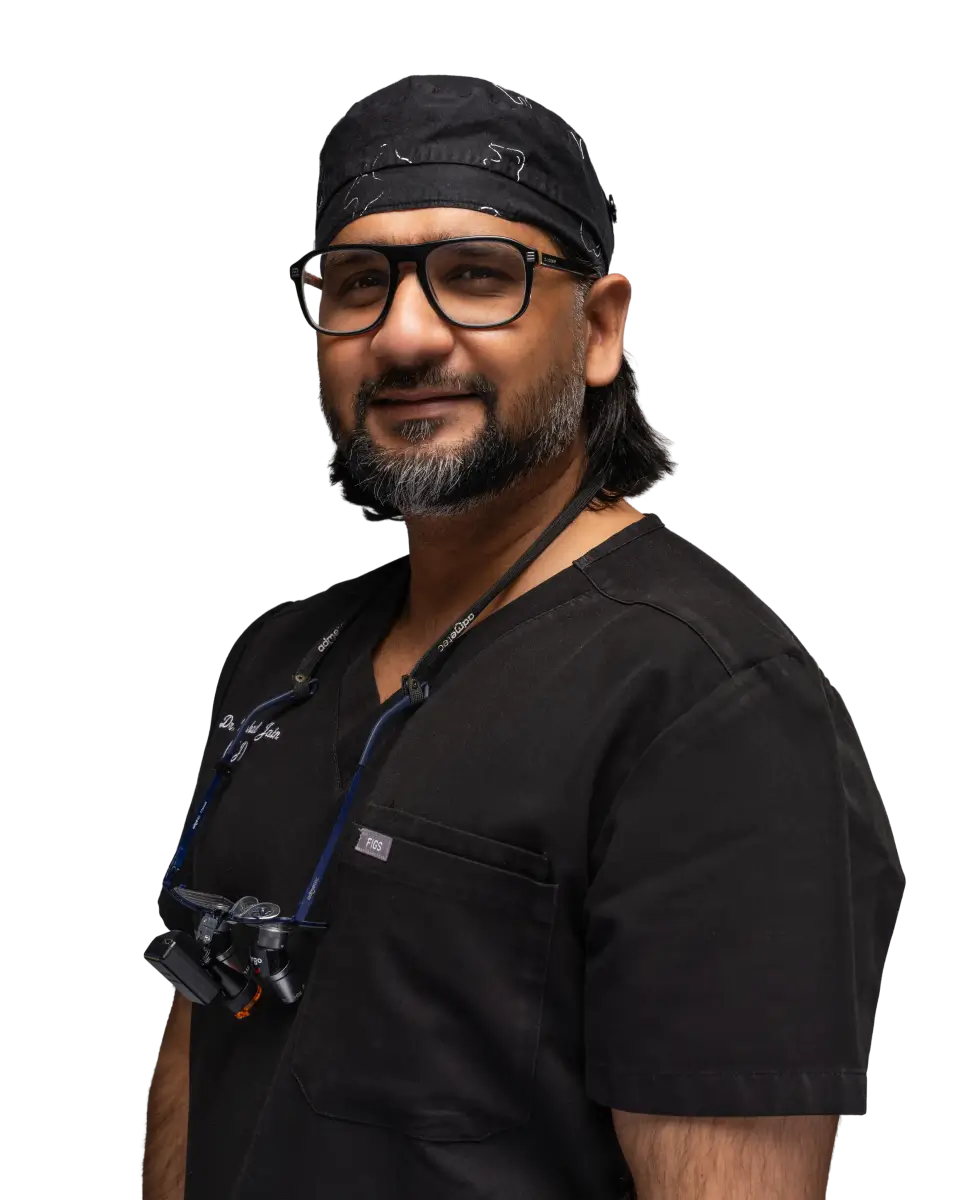




Dental Care That Works for Your Life
Fees Below Alberta Fee Guide
Direct Billing
to Insurance
Open Evenings and Weekends
Same-Day
Emergency Care
Frequently Asked Questions
What if my denture stops fitting properly over time?
That's normal and expected as your mouth changes. We can reline or adjust your denture to restore a proper fit. This is why keeping your regular checkup appointments matters — we monitor the fit and catch changes before they affect your comfort or your remaining teeth.
How long does the whole process take?
Four to five appointments over four to six weeks from first impression to delivery, plus a follow-up fitting appointment. We'll give you a clear timeline at your consultation.
How much does a partial denture cost at La Perle?
The cost depends on how many teeth are being replaced and the type of framework selected. We review all fees with you before anything is started, direct bill your insurance, and offer in-house payment plans for any remaining balance. You'll know the numbers before you make any decisions.
Is a partial denture better than an implant?
They serve different purposes and come with different costs, timelines, and commitments. An implant is a fixed, permanent solution that preserves bone. A partial denture is removable, requires no surgery, and is significantly more affordable. Many patients choose a partial denture now and consider implants later, or find a partial denture fully meets their needs. We'll go through both options honestly at your consultation.
Can I get a partial denture if I have gum disease?
Not until the gum disease is treated. A denture placed over unhealthy gums and bone won't fit properly and will accelerate the underlying problem. We'll be straightforward with you about what needs to happen first and how to get there.
How long does a partial denture last?
A cast metal partial denture typically lasts 10 to 15 years with proper care. The denture itself may hold up well, but the fit will change over time as your bone and gum tissue naturally shifts. Regular checkups let us monitor the fit and reline or adjust it before it becomes a problem.
Do I have to take it out at night?
We generally recommend removing your partial denture at night to give your gum tissue a rest. Soaking it overnight in a denture solution keeps it clean and prevents it from warping. We'll give you specific guidance based on your situation.
Can I eat normally with a partial denture?
Yes, though it takes a little adjustment at first. Start with soft foods cut into small pieces and chew on both sides evenly. Most patients return to a full range of foods within a few weeks. Remove the denture and rinse it after meals.
Is a partial denture comfortable to wear?
Most patients need two to four weeks to fully adjust. Early on, the denture may feel bulky or unusual and your saliva production may increase temporarily. This is normal. After the adjustment period, most patients find their denture comfortable and reliable for eating and speaking.
What is a partial denture, and how is it different from a full denture?
A partial denture replaces some missing teeth in an arch where natural teeth still remain. A full denture replaces all teeth in an arch. Partial dentures use clasps that anchor to your existing teeth for stability — which is why keeping those teeth healthy matters so much.
Located in West Edmonton
La Perle Dental Centre is in the heart of the La Perle neighbourhood, serving families across West Edmonton. Free on-site parking. Easy access from 182 Street NW.
Free parking is available on site. We are near West Jasper Place Community Health Centre at 9710 182 Street NW, Edmonton, AB T5T 3T9.